
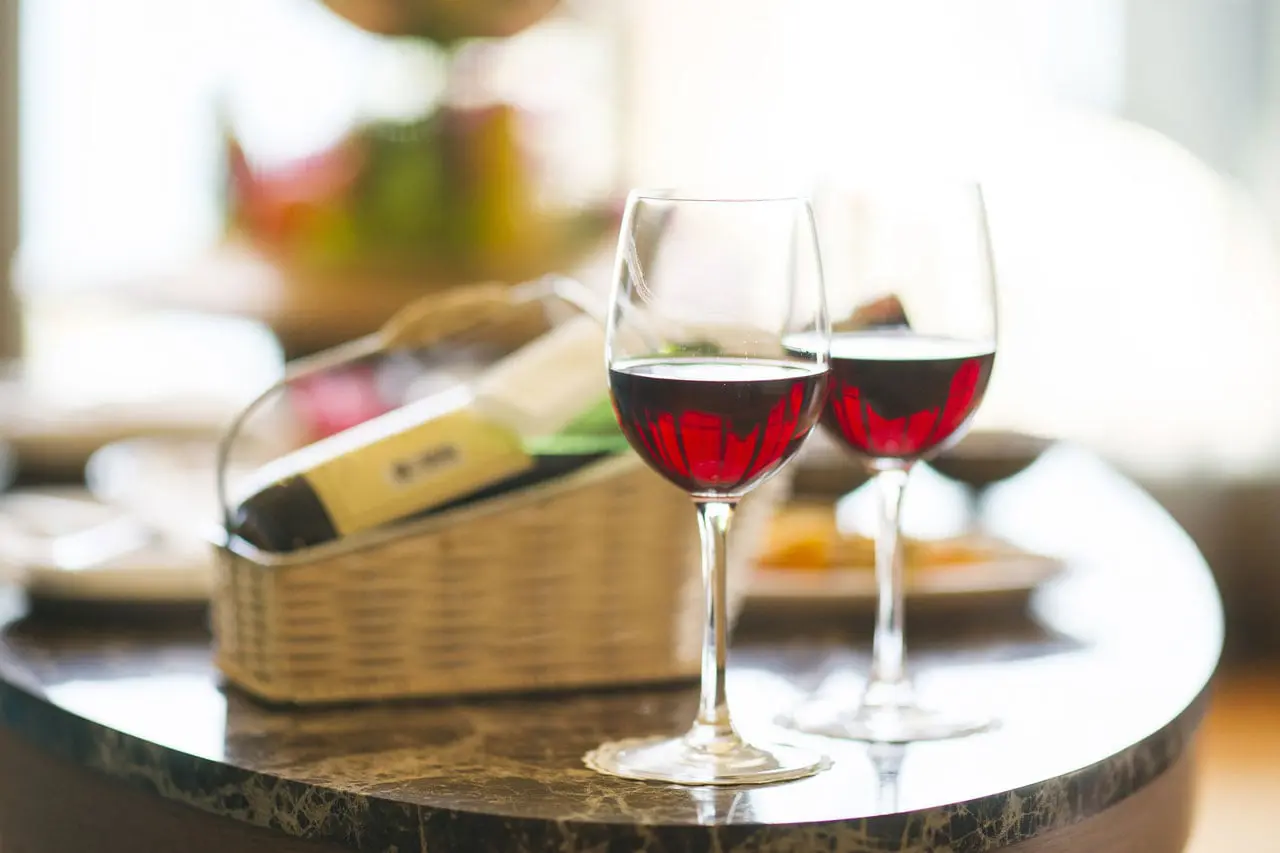
Red wine is made from black (dark coloured) grape varieties. The colour of the wine is often associated with aging of the finished product and younger wines are often of violet hue while older wines more often brick-red or almost brownish. Most black grapes have greenish-white flesh and juice, therefore red wine production is reliant on processing red pigments in the grape’s skin. In fact, much of the flavour of red wine is achieved by extracting and blending components of the skin. Red wines can display a range of flavours, including red berry notes and high tannins, which contribute to their structure and mouthfeel. There are many red wine types, all with their own special characteristics suited to pairing with foodstuffs and stimulating the palate. Most red wines are considered dry wine, meaning they have low residual sugar.
Red wines are primarily categorised by body, influenced by alcohol content, tannins, and acidity.
A little red wine history
Although the history of red wine production seems to have transcended geographical boundaries, there is some consensus that a variety of red wine was being enjoyed in the Caucasus region of Georgia as early as 6000 BC. Archaeologists have also uncovered a history of red wine in Iran at the same time, and also soon after in ancient Egypt, where paintings and inscriptions on tomb walls detail wine production. The heritage of wine making was transferred from one empire to the next, with Babylonians, Greeks and Romans all cultivating land for vineyards and grape production.
Countries such as England don’t have a suitable grape growing climate, and importing red wine from other European countries became a significant feature of early trade. By around the year 1000, Bordeaux was being imported from France, while Pinot Noir in England dates back even earlier to the time of Roman occupation. The Italians developed Chianti in the late 1400s.
A major setback hit the grape growing regions of Europe during the 1800s, when the powdery mildew virus attacked vines without discrimination, almost wiping out the industry. Surviving plants were then attacked by an American aphid insect, further decimating the crop. Fortunately, these obstacles have been overcome, and red wine is now sold around the world, with fans from every nation.

Red wine categories
- Full-Bodied wines: Fuller bodied wines are strongly flavoured and represent richer styles with more intense, complex profiles. These wines are best paired with hearty dishes such as roasts, other red meats, and roasted vegetables.
- Medium-Bodied wines: Wines with a medium body offer a balance between light and fuller bodied styles, providing versatile, balanced flavours and textures. Medium-bodied wines are nicely paired with lighter red meats and game birds.
- Light-Bodied wines: These are less intensely heavy and have a more fruity and sweet flavour. They are comfortably paired with lighter seafoods or white meats.
Red wine types vary from light-bodied and acidic (like Pinot Noir) to full-bodied and tannic (like Cabernet Sauvignon). Generally, lighter reds feature red fruit flavours, while fuller-bodied reds lean toward black fruits.

Red Wine Regions
Red wine is produced in some of the most celebrated wine regions across the globe, each offering its own signature styles and unique expressions. Bordeaux in France is world-renowned for its elegant blends of cabernet sauvignon and merlot, producing some of the most collected wines with deep black fruit flavours and firm tannins. In Italy, Tuscany stands out for its Sangiovese-based reds, which are known for their savoury notes and good acidity, making them a classic pairing with Italian food. Across the Atlantic, California’s Napa Valley is famous for its full bodied cabernet sauvignon and vibrant pinot noir, both of which showcase intense flavours and a silky texture thanks to the region’s warmer climates. Australia’s Barossa Valley is synonymous with big flavour, producing rich, full bodied wines like Shiraz, while the Yarra Valley and Mornington Peninsula are celebrated for their lighter bodied, fruit forward pinot noir. Exploring these diverse wine regions allows you to experience the full spectrum of red wine varieties and discover new favourites from around the wine world.
Full-Bodied wine types
Cabernet Sauvignon
The majority of red wines are made with this grape due to the prolific fruiting and ease of growing. The abundance of tannins in Cabernet Sauvignon facilitates a long aging process that will result in a tasty, dry and bold red wine. Cabernet Sauvignon is known for its high tannins and bold flavours, often featuring notes of black cherry. The effect is even more pronounced when the wine is aged for up to 50 years in oak barrels, as oak ageing imparts additional complexity and can introduce subtle spice or vanilla notes. The tannins create an astringent taste familiar with tea drinkers, and Cabernet Sauvignon grapes grow prolifically in warmer European climates along with California, Australia, Chile and South Africa. Cabernet Sauvignon is often blended with Merlot to introduce a palatable fruity flavour.
Full-bodied red wines such as Cabernet Sauvignon and Shiraz are bold, rich, and high in tannins, often with dark fruit flavours.
Fruits & Vegetables
Merlot
Extremely dark in colour, the full-bodied Merlot has a fruity taste a little similar to that of black currants, although flavours vary radically depending on the climate where the grapes are grown. Varieties include European styles with a berry-like taste, Californian Merlot tasting like cherries, and Australian varieties with a spicy hint. Merlot is an extremely popular red wine and also a valuable mixing grape for producing Bordeaux-style wine varieties.
Nebbiolo
Although not as well known amongst wine novices as Cabernet Sauvignon and Merlot, the Nebbiolo red wine varieties are a distinct category of their own. Nebbiolo is a signature grape of Italy’s Piedmont region, where the unique climate and soil contribute to its renowned character. Nebbiolo wines include Barolo, Nebbiolo d’Alba, Barbaresco and Gattinara, and are usually high in both tannin and alcohol content, and are also known for their high acidity, which contributes to their brightness, freshness, and aging potential. Despite its light colour, Nebbiolo has high tannins and acidity and is noted for complex aromas of rose, tar, and cherry. These wines generally have a full-bodied flavour courtesy of long aging, although recent medium-bodied introductions from Italy and California are less tannic and require a shorter aging period.
Mourvedre
Wine lovers around the world are keen to sample the full range of flavours in red wine appreciation. Mourvedre wine is no exception, and although famous in the Rhone Valley and some areas of Spain, it has also acquired a significant foothold with wine producers in both the US and Australia. Mourvedre grapes are commonly combined with Grenach and Syrah varieties to create a uniquely blended red wine often known as GSM.
Malbec
Initially utilised as a blending grape in the production of Bordeaus wines, Malbec grapes have taken on a new life. The long, hot growing season of Argentina and Chilean regions are a perfect match for these grapes which thrive in South American conditions. Malbec is deep red, full-bodied and flavourful, often featuring notes of dark cherry along with other dark fruit flavours such as blackberry and plum. Oak ageing is commonly used for Malbec, imparting additional complexity and subtle spice to the wine. Malbec is known for its dark fruit flavours such as blackberry and plum, and is often paired with rich meaty dishes.

Medium-Bodied wine types
Shiraz
Syrah, known as Shiraz in Australia, ranges widely in flavour and can include spicy or fruity tastes. Shiraz is known for its bold, full-bodied profile with peppery, spicy characteristics, including both black pepper and white pepper notes, often combined with black fruit like blackberry. It is very dark in colour and bold on the palate. Shiraz thrives in warmer regions, which contribute to its ripe, intense flavors. It is also Australia’s most popular wine style and is grown in every wine region in Australia. Popular Australian varieties include the well-known d’Arenberg styles produced in McLaren Vale. The dramatic rise in popularity of Shiraz since the 1990s is partly due to a rise in Bordeaux prices at that time, coupled with several bad growing seasons. Australian Shiraz is fruitier than that grown in its traditional homeland where it is blended with Grenach to produce a dry, full-bodied wine.
Sangiovese
The famous Tuscany wine growing region of Italy is renowned for its Sangiovese red wine. Sangiovese often displays herbal notes, including hints of dried herbs and tomato leaf, which add complexity to its profile and enhance its pairing with savoury and Mediterranean dishes. The tannins in Sangiovese are exquisitely tempered by fruit flavours that provide an easy to drink medium-bodied experience. Sangiovese is also known for its high acidity, which provides a tart or sour taste, especially in cooler climate wines. The drier varieties of Sangiovese should be appropriately stored and aged well before opening. The well-known Chianti red wine is often made from 100% Sangiovese grapes, and is easily recognised when packaged with the bottle wrapped in a traditional straw basket.
Alcoholic Beverages
Barbera
Although an original Italian product, Barbera wine has made rapid inroads in California and Argentina. Barbera is easy on the palate, typically featuring low tannins that contribute to its smooth and approachable style. It is known for its vibrant dark cherry flavours and high acidity, making it both lively and exceptionally food-friendly. Some winemakers are inclined to age it in oak barrels to create a more interesting and complex taste. Barbera is a luxurious colour, and is permeated with aromas of fruit or spice. Barbera is also grown in Australia’s King Valley, a region recognised for producing high-quality examples of this variety.
Zinfandel
This is a abundantly fruiting variety of grape, first introduced to the USA in the early 19th century. It has since become synonymous with Californian wine making, with a huge range of Zinfandel wine varieties available. Cultivation is considered a little difficult as the grapes ripen unevenly, however, the vines can grow for the best part of 100 years, and as the vines age the grapes become more intense and flavourful.

Light-Bodied wine types
Pinot Noir
This light-bodied wine is a pale red colour and has a heady aroma of summer fruit. Pinot Noir is often recommended for beginners due to its light body and fruit-forward flavours. It is typically low in colour pigmentation and displays red fruit such as cherry, red berry, and blood plum flavours. Pinot Noir is best served slightly chilled to enhance its delicate flavours. Pinot Noir boasts a noble history dating back to Roman times and was even used as a sacrament by early monks. This wine is named after the noble Pinot family and the name has survived the French Revolution and secular government intervention. A predominantly French wine, Pinot Noir is soft and velvety, without an overriding tannin taste.
Cabernet Franc
Famous in the Bordeaux region of France as well as in California, Cabernet Franc has a hint of spice that is invaluable in red wine blends. The flavour varies greatly according to the growing region and is sometimes accented with a flowery or fruity aroma. Cabernet Franc is pale red and an easy to drink light-bodied wine.
Gamay
As with many light-bodied red wines, Gamay has a relatively low alcohol content and only medium tannins. For these reasons, along with the fruity flavours and tempting aroma, Gamay is easy to drink and may well suit newcomers to red wine. Gamay pairs perfectly with a variety of foods due to its light, fruity profile, making it a versatile choice at the table. Beaujolais, made from Gamay grapes, is often considered a gateway wine for those who think they don’t like red wine. Well known Gamay wines include Beaujolais, Anjou Gamay and Gamay de Touraine, all hailing from France, and specifically from the beautiful Loire Valley region.

Wine Production Methods
The journey from grape to bottle of red is shaped by a series of careful production methods that define the character of each wine. Red wine begins with harvesting ripe red grape varieties, often timed to capture the perfect balance of sugar and acidity. After crushing, the grape skins remain in contact with the juice during fermentation, extracting colour, tannins, and rich flavours. Techniques like cold soak can enhance fruit flavours, while malolactic fermentation softens acidity and adds a creamy, round texture to the wine. Many red wines are aged in oak barrels, which impart gentle spice, vanilla, and earthy notes, while bottle aging allows the wine to develop complexity and depth. Winemakers may also blend different grape varieties or use fining agents to achieve a harmonious, balanced wine. Each step in the process, from vineyard to cellar, contributes to the unique profile of every red wine produced.
Sweet red wines
There are several varieties of sweet red wine that have grown in popularity during recent years. They are a great introductory red wine option, and can be perfect on a summers day when a full-bodied heavy wine wouldn’t be appropriate. Sweet red wines go down well with lunch or dinner, and remain a favourite as a dessert wine. Impressive varieties include Beaugolais from France and Amarone from Italy.
An incredible range of red wines are created with the limited number of grape varieties available. Climate, seasons, soil, blends, aging and much more contribute to making a great red wine, and it comes as no surprise that the most highly praised wines are the result of hundreds of years perfecting the wine making art. Consistently producing wines that earn prestigious awards is no small feat, and even the best winemakers are at the mercy of the weather, plant diseases and pests in trying to produce the perfect wine, and the results can vary from year to year. The best wines are sought out by collectors and can fetch thousands of dollars per bottle. Wine making is a true beverage art-form that continues to capture the imagination of connoisseurs and casual drinkers, and the thirst for good red wine doesn’t look set to slow down any time soon.
Fruits & Vegetables
Red Wine and Food Pairing
Pairing red wine with food is all about balancing flavours, textures, and intensity. Lighter bodied reds like pinot noir, with their red fruit flavours and silky texture, are a classic pairing for lighter dishes such as salmon, roast chicken, or earthy mushroom risotto. Medium bodied reds, such as merlot or sangiovese, offer soft tannins and juicy plum notes that complement Italian food, grilled meats, and tomato-based pasta dishes. For heartier fare, full bodied reds like cabernet sauvignon or shiraz, with their firm tannins and dark fruit flavours, stand up beautifully to slow cooked meats, rich stews, and even a square of dark chocolate. The key is to match the weight and intensity of the wine with your dish—medium bodied reds for versatile pairings, full bodied red for bold flavours, and lighter bodied wines for more delicate meals. Whether you’re enjoying a bottle of red with grilled meats or a classic pasta, there’s a perfect red wine to elevate every meal.
Comparison to Other Wines
Red wine stands apart from other wines thanks to its depth of flavour, structure, and complexity. While white wine is typically lighter, crisper, and features citrus or floral notes, red wine is known for its dark fruit, earthy flavours, and robust tannins. Sparkling wines, such as Champagne, are celebrated for their effervescence and are often reserved for special occasions, whereas red wine is incredibly food friendly and suited to both casual and formal settings. When choosing between red wine and white wine, consider the flavour profile, acidity, and tannin level that best matches your meal and personal taste. Red wine’s versatility and range—from lighter bodied pinot noir to full bodied cabernet sauvignon—make it a staple in the wine world for both new and experienced wine lovers.
Bringing It All Together
In conclusion, the world of red wine is as diverse as it is captivating, offering something for every palate and occasion. From the bold, collected wines of cabernet sauvignon to the silky texture and elegance of pinot noir, red wine invites exploration and enjoyment. By understanding the influence of regions like the Barossa Valley and Yarra Valley, the impact of production methods such as malolactic fermentation, and the art of food pairing, you can deepen your appreciation for this timeless beverage. Whether you’re savoring a glass of wine with friends or discovering a new favourite bottle, red wine promises rich flavours, intriguing aromas, and endless opportunities for discovery. So pour yourself a glass and enjoy the journey through the vibrant world of red wine.




No Comments