Pay in installments of $7.37 with
 ,
,
 and
and

Shipping Estimate
USA
- USA
- CAN
- USA
- CAN
Ships within 48 hours · Estimated delivery Jun 29 - Jul 4
 Promo Codes Available:
For Your Every Summer RSVP, with Code: SUMMER15
Description
anthurium caucavallense flower Anthurium pulcachense – Sub-Velvety Dark Green SpeciesAnthurium pulcachense Anthurium pulcachense is a Peruvian Anthurium with narrow dark green leaves, a softly subvelvety upper surface and deep rose pink cataphylls around new growth. The elongated blades are held on upright petioles and show their texture best in filtered light. The species comes from San Martn, Peru, near Pulcache, at 630950 m elevation in Premontane wet forest. In cultivation, it should be treated as a warm, humidity loving
Anthurium pulcachense
Anthurium pulcachense is a Peruvian Anthurium with narrow dark green leaves, a softly subvelvety upper surface and deep rose-pink cataphylls around new growth. The elongated blades are held on upright petioles and show their texture best in filtered light.
The species comes from San Martín, Peru, near Pulcache, at 630–950 m elevation in Premontane wet forest. In cultivation, it should be treated as a warm, humidity-loving terrestrial Anthurium with dense roots, a short stem and a need for steady moisture in an airy substrate.
Narrow leaves, rose cataphylls and Peruvian habitat
- Leaf shape: Blades are narrowly ovate and cordate to subcordate, with an elongated outline.
- Leaf surface: The upper leaf surface is dark green and subvelvety, while the underside is paler and matte.
- Cataphylls: New growth is wrapped by deep rose-pink cataphylls that can remain visible around the stem.
- Petioles: The petioles are sharply triangular-winged, adding detail beyond the leaf blade itself.
- Growth habit: The species has a short erect stem, short internodes and dense roots.
- Origin: It comes from wet premontane forest near Pulcache in San Martín, Peru.
Short-stemmed growth and dense roots
Anthurium pulcachense develops from a short stem with closely spaced growth and dense roots. Its leaves are held erect to spreading, with narrow blades that show a dark upper surface and a paler, matte underside. Deep rose-pink cataphylls wrap new growth around the short stem.
The dense root zone should stay evenly moist and warm, with enough coarse material that water drains through the pot and air returns around the roots after watering.
Wet-forest care for Anthurium pulcachense
- Humidity: Higher humidity helps new leaves and cataphylls open smoothly, especially while growth is soft.
- Watering: Keep the substrate lightly and evenly moist, watering before the root ball dries hard.
- Substrate: Use an airy, moisture-retentive aroid mix with bark, fibre and mineral drainage material.
- Light: Give bright filtered light. Direct sun can mark the subvelvety leaf surface and dull the dark green surface.
- Stem care: Keep the short stem above compacted wet substrate so the base stays firm and oxygen reaches the roots.
- Temperature: Keep it consistently warm. Cold stress can slow new growth and damage wet roots.
- Leaf care: Clean leaves gently and avoid polishing products, which can mark or clog the softly textured surface.
- Feeding: Feed lightly during active growth. Excess fertiliser can leave residue on roots and leaf surfaces.
Leaf and cataphyll issues
- Stuck cataphylls: Dry air can cause new growth to catch before the leaf expands fully.
- Distorted leaves: Low humidity, root stress or pest damage can affect narrow new blades while they are still soft.
- Yellowing leaves: Stale wet substrate around dense roots can lead to root stress and yellow foliage.
- Dull leaf surface: Direct sun, mineral residue or rough cleaning can mark the subvelvety upper side.
- Slow recovery: Chilling can pause growth for a long period, especially if the substrate is wet.
Handling safety for Anthurium pulcachense
Anthurium pulcachense contains insoluble calcium oxalate crystals and should not be placed where pets or small children can chew it. Contact with sap can irritate sensitive skin, so wash your hands after pruning or handling damaged tissue.
Locality and name background
Anthurium pulcachense is an accepted species described by Thomas B. Croat and published in Novon in 2008. The species comes from San Martín, Peru, near Pulcache, and the name refers to that locality. Its documented habitat is Premontane wet forest at 630–950 m elevation.
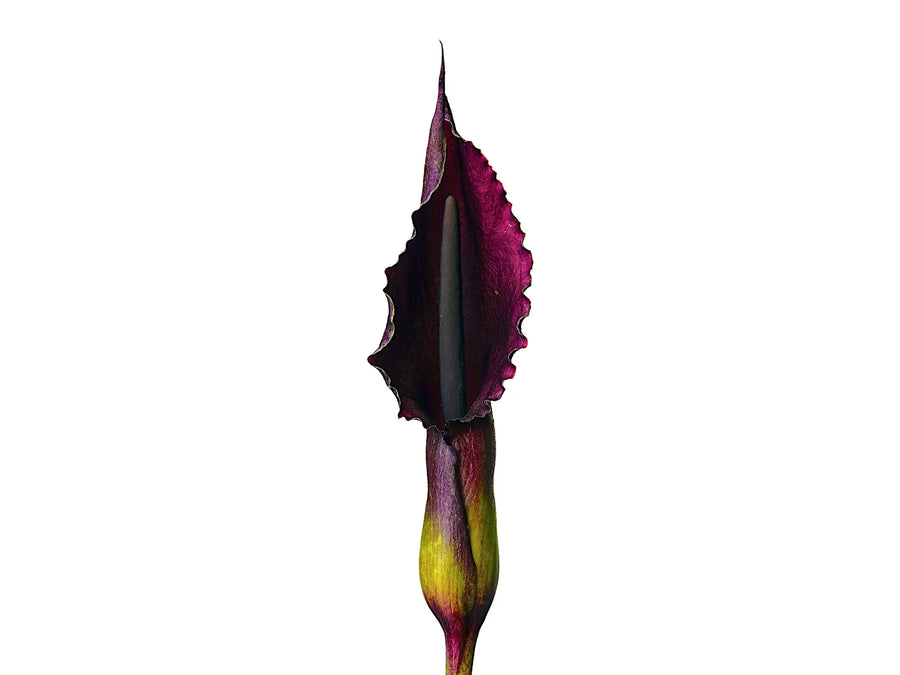
New growth on Anthurium pulcachense combines narrow dark leaves with rose-pink cataphylls around a short, dense-rooted stem.
Shipping Notes
- Free Standard Shipping on $100+ Orders to the USA.
- Except Preorder products are shipped in 48 hours.
- Delivery to the USA:
- Standard Shipping : 3-10 business days
- If time is of the essence, please consider selecting expedited delivery for faster service.
Exchange/Return Notes
- We offer a 30-day return/exchange service after receiving.
- Final sale items are not eligible for returns or exchanges.
- To process your return/exchange, please contact us at [email protected]
- Please click here for more details>>> Return & Exchange Policy