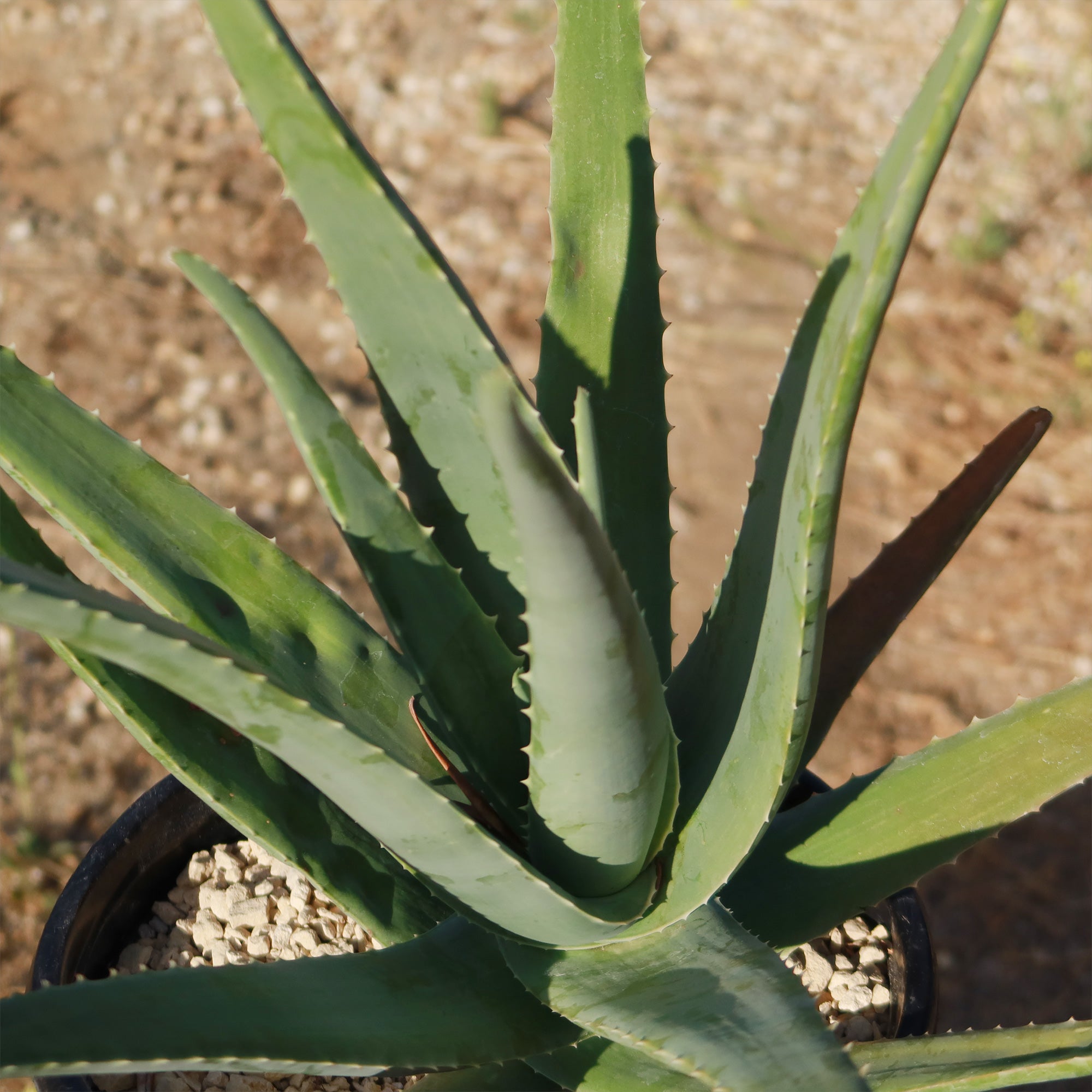
aloe vera plant giant Aloe Vera
SKU: 96794838726
aloe vera plant giant

aloe vera plant giant Aloe Vera

Sale price$21.66 Regular price$24.07
Save 10%

Pay in installments of $6.02 with ShopPay, AfterPay and Klarna

Shipping Estimate
USA
  • USA
  • CAN

Ships within 48 hours · Estimated delivery Jul 1 - Jul 6

Promo Codes Available:

For Your Every Summer RSVP, with Code: SUMMER15

Description

aloe vera plant giant Aloe VeraIntroducing the fabulous Aloe Vera plant also known as Aloe barbadensis 'miller,' it is also known as a medicinal aloe and burn plant. The Aloe vera plant is by far the most popular out of over 400 varieties of the Aloe genus. This incredible tropical succulent is not your average houseplant. It's a superstar known for its leaves, which hold a magical aloe vera gel for soothing sunburn and as a popular drink to help your stomach. This large Aloe vera

Introducing the fabulous Aloe Vera plant- also known as Aloe barbadensis 'miller,' it is also known as a medicinal aloe and burn plant. The Aloe vera plant is by far the most popular out of over 400 varieties of the Aloe genus.

This incredible tropical succulent is not your average houseplant. It's a superstar known for its leaves, which hold a magical aloe vera gel for soothing sunburn and as a popular drink to help your stomach.

This large Aloe vera plant boasts fleshy lance-shaped grey-green leaves with small white teeth along the edges growing out from a starfish-like basal rosette. 

The edible aloe vera flowers burst into bloom in vibrant shades of yellow at the tips of their stalks when given favorable conditions. Only mature plants will yield flowers, so you'll have to wait at least four years to see an aloe vera bloom. However, in some growing conditions (especially hybrid plants), the flowers can sometimes appear with orange or reddish hues. 

This fast-growing succulent can grow into a large aloe vera plant up to 3 feet tall and 2 feet wide and even produce adorable pups that you can repot or share as delightful gifts with fellow plant enthusiasts.

How to Get Aloe Vera Gel from the plant to use on your skin

  1. Choose and Cut a Leaf: Select a large, healthy leaf from the bottom of the plant. Use a sharp knife to cut the entire leaf off at the base.
  2. Prepare the Leaf: Let the leaf sit upright in a container for 10–15 minutes to allow the yellow sap (aloin) to drain out. This sap can be irritating to the skin.
  3. Slice and Extract the Gel: For a small amount of gel, cut a section from the leaf rather than using the whole thing. Slice the leaf lengthwise to expose the gel. Use a spoon or knife to scoop out the clear gel.
  4. Apply or Store: Apply directly to your skin for soothing relief. Store extra gel in an airtight container in the fridge for a few days.

Aloe vera juice has many benefits for humans, this succulent rich in antibacterial, antioxidant, and anti-inflammatory properties, may enhance digestion, blood sugar levels, and oral health, although certain compounds, particularly aloin, may cause digestive discomfort and other side effects.

An aloe vera indoor plant is a great addition to any home, as it is easy to aloe vera care for and provides a variety of aloe vera benefits. 

According to the American Academy of Dermatology, Aloe vera has anti-inflammatory properties that can help in wound healing. It can also help to moisturize the skin and prevent peeling.

When and How to Water Your Aloe Vera 

As a desert dweller, watering the aloe vera succulent may be tricky, it may shrivel and die if given too little water, but it may also easily rot when given excessive water. So be careful not to overwater your aloe plantyou only want to give it enough to keep it from drying out completely, not drown it! 

A good rule of thumb is to water the Aloe plants deeply and then allow the soil to dry out completely before watering again. In the spring and summer, during the growing season, watering can be done once every 2-3 weeks.

During the winter months, when aloe vera is in a dormant period, it can be watered even less frequently. If you live in a rainy climate, consider planting aloe in gravel or stones. 

It is also important to note that aloe vera plants are sensitive to water quality. They prefer water that is low in minerals and salts, so it is best to use distilled or filtered water. Tap water can be used, but it should be left out for 24 hours before watering the plant to allow the chlorine to evaporate.

Light Requirements - Where to Place Your Aloe Vera Plant 

When growing indoors as a houseplant, place the aloe vera a few feet away from the south-facing window that receives plenty of sunlight, but it is important to avoid direct sunlight, as this can cause the leaves to burn. If the aloe plant is not receiving enough light, the leaves will start to droop and turn brown. In this case, it may be necessary to move the aloe vera plant to a brighter location. 

When planted outdoors, your Aloe plants need their daily dose of sunshine like a beach-loving teenager needs their favorite tunes!

They thrive on at least 6 to 8 hours of direct sunlight, soaking up those glorious rays with joy.

But wait, before you go dragging your aloe plant from its cozy shady spot into the blazing sun, be cautious. That sudden move can dry out your leafy buddy and leave it looking as yellow as a lemon.  

Now imagine you live in one of those cooler climates where clouds have permanent residency or if your home lacks these sunny windows altogether.

Fear not; you can use artificial lights – they're like little suns in bulb form! Hang them about one to two feet above your precious plant during daylight hours (that's roughly 16 hours per day) and watch it flourish happily amidst dim interiors.

Optimal Soil & Fertilizer Needs 

Aloe vera plants prefer well-draining soil that is a mixture of sand, perlite, and peat moss. It is critical to avoid soil that retains excessive moisture, as this can cause root rot. Instead, make or buy a well-draining potting mix, or ideally use our specialized succulent potting mix soil for aloe vera that contains 5 natural substrates and mycorrhizae to promote the development of a strong root system that helps your succulent to thrive.  

In terms of fertilizer, aloe succulents do not require a lot of nutrients. They can be fertilized once a year in the spring with a balanced fertilizer (NPK) of 5-10-5 in ratio. It is important not to over-fertilize the aloe plant, as this can lead to root burn. 

Hardiness Zones & More 

When grown indoors as a houseplant, aloe vera plants prefer a warm and dry environment. They thrive in temperatures between 60°F and 80°F. Aloe vera is a succulent, so it's adapted to arid conditions and doesn't do well in overly humid environments. Aim for a humidity level of around 30% to 40% for your indoor aloe vera plant.

In the United States, this is mostly an indoor plant, but if you live in southern Florida or Hawaii then you can cultivate it outdoors in USDA zones 9-11

Aloe vera can tolerate temperatures as low as 40°F for short periods, but prolonged exposure to freezing temperatures can damage or kill the plant. If you live in a colder climate, it's best to keep your aloe vera indoors or provide protection during winter months.

Aloe vera plants prefer dry air and do not require high levels of humidity. They can tolerate low humidity levels and do not need to be misted or placed in a humid environment. 

Wildlife - Aloe Vera Attracts the Following Friendly Pollinators

Aloe vera plants attract a variety of friendly pollinators, including bees, butterflies, and hummingbirds. These pollinators are essential for the reproduction of aloe vera plants, as they help transfer pollen between flowers, ultimately leading to the production of seeds. Additionally, these pollinators play a crucial role in maintaining biodiversity and ecosystem health.

Butterflies
Bees
Hummingbirds
Lady Bugs
Multi Pollinators
Other Birds

According to the ASPCA, the Aloe vera can be mildly toxic to pets and humans. It is rare but can occur if consumed in large quantities and can cause abdominal cramps, diarrhea, and electrolyte imbalances. It is important to consult a healthcare professional if you experience any adverse effects from consuming aloe vera.

How to Propagate Your Aloe Vera Plant

To propagate your aloe vera plant, you can separate the offsets or "pups" that grow at the base of the main plant. Gently remove these pups and plant them in their own pots with well-draining soil to encourage root growth. Water sparingly until they establish themselves, and place them in a sunny spot to promote healthy growth.

Aloe Vera: The Natural Sunburn Remedy


Aloe vera gel is known for its ability to moisturize the skin, it helps soothe burns and sunburns, as well as being known for its anti-inflammatory and antibacterial properties.

Aloe Vera is also rich in vitamins and minerals that are essential for healthy skin. It is best to use pure aloe gel extracted directly from an aloe vera plant.

To use aloe vera gel to soothe sunburns, cut off a piece of the large aloe vera leaf and open it to reveal the gel.

To maintain the aesthetic appeal of your aloe plant, it is advisable to cut off the entire leaf of the large aloe vera plant when cutting one. Just chop the leaf off as close to the main stem as you can. Cutting leaves from the base of the plant is always preferable. These leaves will be thicker since they are older. If you cut off the tip of a leaf, it will eventually turn brown at the tip because cut leaves keep their scars.

Key Takeaways

  1. Aloe vera is renowned for its medicinal properties, particularly its soothing gel, which is widely used for treating burns, wounds, and skin irritations. Its natural compounds, like aloin and acemannan, have anti-inflammatory and healing properties.
  2. When cut, aloe vera can seal its own wounds by producing protective latex, showcasing its remarkable survival mechanism in harsh environments.
  3. Aloe vera is not just a skincare savior; it also purifies indoor air by removing harmful pollutants like formaldehyde and benzene, making it a great addition to homes and offices.
  4. Native to arid regions, aloe vera thrives in minimal water conditions. It stores water in its thick, fleshy leaves, allowing it to endure prolonged droughts.
  5. The inner gel of aloe vera leaves is edible and used in drinks and food for its health benefits, such as aiding digestion, boosting immunity, and providing hydration. Always ensure proper preparation to remove any bitter or toxic compounds.
  6. The presence of yellow flower buds is a strong indicator of the edible variety.

The Bottom Line

Overall, Aloe vera is a popular plant known for its healing properties and versatility. It has gained popularity for its ability to help heal wounds, cuts, and burns, including sunburns. The gel inside the aloe vera leaves contains soothing and moisturizing properties that can provide relief and promote healing. In terms of care, aloe vera is relatively low-maintenance. It thrives in well-draining soil and requires moderate watering. It prefers bright, indirect sunlight but can tolerate some shade. 

A lot of people have a hard time finding large aloe vera plants, but here at Planet Desert, we regularly have large sizes in stock. Don't miss out on adding an Aloe vera plant for sale to your garden! Order now and enjoy its beauty for years to come. 

Shipping Notes
  • Free Standard Shipping on $100+ Orders to the USA.
  • Except Preorder products are shipped in 48 hours.
  • Delivery to the USA:
  1. Standard Shipping : 3-10 business days
  • If time is of the essence, please consider selecting expedited delivery for faster service.
Exchange/Return Notes
  • We offer a 30-day return/exchange service after receiving.
  • Final sale items are not eligible for returns or exchanges.
  • To process your return/exchange, please contact us at [email protected]
  • Please click here for more details>>> Return & Exchange Policy
SKU: 96794838726

Discover Niche Categories That Outsell aloe vera plant giant

Top-Converting Item to Boost Your Average Order

4.7 ★★★★★
Based on 1660 reviews
Sort
Highest Rating
Newest First
Oldest First
Product Reviews
C
Verified Purchase
Carmen Alicea
Natrona Heights, US
★★★★★ 5
A Beta Worth Rooting For
Format: Kindle
In Spare, Violet Fox flips the omegaverse on its head, giving us a Beta heroine determined to make her mark. Joining the Beta Trials to support her sick father, she's thrown into a pack that doesn't want her, especially the possessive Alphas. But here's the twist: their sweet Omega turns out to be her scent match. Cue the angst, forbidden tension, and a slow-burn romance that will make your heart ache in the best way. Violet Fox delivers an emotional, refreshing take on the genre, proving Betas aren't "spares." They're stars.
WAS THIS REVIEW HELPFUL?YesReportShare
Reviewed in the United States on January 10, 2025
C
Verified Purchase
C. Hunter
Fort Morgan, US
★★★★★ 5
Beta, Alpha, Omega oh my!
Format: Kindle
Omegas are precious and given to Alphas & their packs... but the Betas want in too. To this end, the Beta government is rolling out its trial of assigning a Beta to each Alpha-Omega pack. But forcing a Beta into a pack where they are not wanted will not end well... Of course, no one expected the Omega to fall for the assigned Beta. Great read and cliffhanger
WAS THIS REVIEW HELPFUL?YesReportShare
Reviewed in the United States on February 15, 2025
B
Verified Purchase
B. Stubby
Waukegan, US
★★★★★ 3
A familiar story, just with…..less.
Format: Kindle
So, as other reviewers make clear, this is very similar to Pack Darling and The Beta. It’s much closer aligned with The Beta, in plot and maybe more like Pack Darling with characters. That being said, I don’t hate this…..but it wasn’t great either. It’s both books mentioned but just….less. Less angst, less emotion, less feeling. The plot feels very half fleshed out, and the “bad guy” feels underwhelming. I didn’t really feel any real emotions from and of the male leads, except maybe Oliver. The others fell sorta flat for me. And Mika makes herself out to be this big bad ass straight outta training and then we never see it from here again with the one fitting room incident as the exception. SPOILER: The whole, “Oh, I’m actually probably an Omega, but I don’t wanna be but I do actually wanna be but no one can ever know my secret that I do nothing to hide “ thing fell so flat. She never commutes to believing she was secretly an omega, but also mentions her “secret” a lot. It just felt so manufactured. I’m intrigued enough to read part 2 and see how the author closes everything out, but this is not one I’ll recommend or ever come back to.
WAS THIS REVIEW HELPFUL?YesReportShare
Reviewed in the United States on February 13, 2024
K
Verified Purchase
Kayla Cercone
Port Orchard, US
★★★★★ 5
No Mourners..
Format: Hardcover
‘No mourners…’ ‘…no funerals.’ Among them, it passed for good luck. ” This quote is a perfect description of the tone set throughout this entire novel. A hopelessness so ingrained in a group of people that their phrase for good luck is hinged around the idea of no one mourning or honoring their deaths. Having read the Shadow and Bone trilogy, I was familiar with the Grisha universe prior to reading this novel. If you’re wondering which you should read first, I suggest reading the trilogy prior to the duology — it will get you a lot of historical context that lays the foundation for the problems, war and ultimate state of the world this book is set it. I will say, I enjoyed the Grisha trilogy but found myself frustrated with the direction the story ended up going. Leigh Bardugo is a phenomenal writer but it felt like the end of that trilogy took the easy way out — but that review is for a different day. Six of crows shows Bardugo’s redemption in making the difficult but correct plot choices, in my opinion. This entire book is thrilling because the reader (presumably having read her previous Grisha trilogy) goes into the story assuming they will have some idea of where the story will go, having explored this world before. This couldn’t be farther from the truth. Six of crows follows the dark and dangerous mob-lifestyles in the Barrel of Ketterdam, far away from the Golden Palace of Prince Nikolai and the worshiped Sankta Alina. Bardugo does not shy away from the dark and gruesome reality of the mob lifestyle, she embraces it. Readers are shown vivid descriptions of call-girls, gambling rings, mistakes punishable by death and ruthless leaders capable of lethality at any second. Despite such a horrific environment, Bardugo’s character development leaves the readers connecting, loving and rooting for characters with truly horrible qualities. One thing I appreciated was the pacing of this story – you’re shown an enticing and mysterious scene right off the bat, completely immersing you into this story as you crave to find out more behind what happened. Immediately, you’re pulled away and shown the humble beginnings of Kas Brekker and the Dregs from the Crow Club, learning about their personalities, roles, and motives for the dangerous job that takes up most of the story. Readers learn details slowly — not so slow that they’re bored — but slow enough that they’re kept hooked to the plot, hoping the next page turn will provide the answer they need. Just when you might become a bit bored by the plot, a twist or exciting, unexpected wrench gets thrown into the mix bringing you back in. As you go along in the story, you’re introduced to more details about each member of the Dregs, their pasts that led them to this journey they take together, and the secrets that shape their relationships. These details are done brilliantly, as readers are able to see these memories and experiences from each characters point of view. This brings a human quality to the characters and allows readers to empathize with their situations, thus creating a bond between reader and character that allows them to continue to love and support the Dregs despite the horrible things they do to each other and others throughout the journey. You’re rooting for them to get the endings they want and deserve and hoping they won’t choose to lie, cheat, kill and steal in order to get there, but ultimately accept that that is just who they are. The only time this aspect of the characters was frustrating was at the end of the book. The relationship between Kaz and Inej is tantalizingly frustrating throughout the story, but the end of the book is where we really see Kaz’s nature and I found myself so frustrated that he couldn’t be better for her and that because of him, Inej gets placed in the worst case scenario. I’m hoping that he redeems himself in the second installment. Overall — there’s no denying that Leigh Bardugo has talent and if you loved the first trilogy, I guarantee you’ll love this one even more. If you had mixed feelings on the first Grisha trilogy, I urge you to give this duology a try. I think you’ll be pleasantly surprised. Stay tuned for the review around book two!
WAS THIS REVIEW HELPFUL?YesReportShare
Reviewed in the United States on September 8, 2017
E
Verified Purchase
Erika M
Louisville, US
★★★★★ 4
Great read with an interesting plot
It took me quite some time to get to this book, mostly because I never managed to read the original Grisha trilogy, I tried several times to get started with it, but there was something about it that didn’t quite suck me in. Eventually though, I gave up that series and decided to dig into Six of Crows even though I had not read the Grisha trilogy in advance. And I am happy that I did because Six of Crows was an easy read that pulled me in rather quickly. In Six of Crows we follow a group of six criminals from a gang called the Dregs, and when their leader, Kaz, gets a job that would change their lives forever, he can’t say no, despite the job being as impossible as it gets. So, in this book, we get to come along on the quest as they set out to break into one of the most secure prisoners in Fjerda. There’s a lot of things that I really enjoy in this book, but also a few things that slightly annoyed me. But for the most part this is a great read and the way the author has managed to keep the reader invested in all three characters and their separate POVs is impressive, not once did I feel like any of the characters were unnecessary or flat. Every character is well developed with interesting backstory and there’s also a lot going on in their relationships and thanks to the separate POV’s you get a very intimate connection to each an ever characters emotions and reasons to what they do. It’s, like I said, beautifully crafted and the writing too is beautiful and vivid. The wordbuiling is great and Bardugo manages to incorporate details of the world and the scenery in the story without it feeling heavy with information. It all flows very well, and as I read it was easy to picture the scenes. The plot was interesting, full of twists and turns and seeing the team’s job take shape from the eyes of multiple POVs made for a very interesting read and also gave the heist that sense of mystery and surprise that we’re used to seeing on tv and in movies. As for the things that I didn’t quite like it was not bad enough to really make a difference in the overall rating, but it was still things that stuck out to me. The first being that I felt like the heist sometimes got overshadowed by massive bits of backstory. The backstory itself didn’t bother me because they were interesting and great, and they made me understand and connect with the character a lot more, but I didn’t feel like they were necessary for the story in that elaborated manor they had been written in, less information had been enough and kept the pacing of the main plot more consistent. So, even though I enjoyed learning about the characters pasts and the reasons they ended up in the gang, I would have preferred more focus on the heist itself. The second thing is the beginning. It was unnecessary and pointless. Why make us invested in Joost and Anya just to basically never mention them again? I get the point of showing what the drug could do, but there must have been a better way to do it. The third thing is related to the Fjerdans and primarily their language. The Fjerdan’s are, according to what I’ve read from interviews with Leigh Bardugo, heavily influenced by Scandinavia, and more specifically Sweden and Norway. As a swede, I can totally see that, and I knew that it is a fictional language and that my own language has been used as inspiration. But I couldn’t help feel a bit thrown off when there was suddenly words that I knew from my own language being used when there was so many other words used that didn’t fit at all with the way we’d use those words. It’s hard to explain, and truly it doesn’t really matter since it’s fiction and not real, but it was something that stood out to me, like a hiccup that broke the flow of my reading. I think it would have bothered me less if the Fjerdans had actually spoken any of the Scandinavian languages, or at least had a more reasonable structure to their sentences and words that would have fit well with the use of actual words from our language. And in this same line are the names of the Fjerdan Drüskelle. There were typical Scandinavian names at a lot of the times, but then there were these names that stood out and didn’t fit in with the rest we’d been told. But, I’m not going to let any of this affect the rating since this is just a personal thing that most likely wouldn’t bothered anyone else, and if does not in any way affect the intensity and greatness of the story. So, overall, this book will get a solid 4/5 stars from me, and I can’t wait to dig into the sequel. I can also highly recommend this book to basically everyone, it’s a great read and the way Leigh Bardugo handled all six POVs is reason enough for every author to pick up this book.
WAS THIS REVIEW HELPFUL?YesReportShare
Reviewed in the United States on February 16, 2019

recommand products